
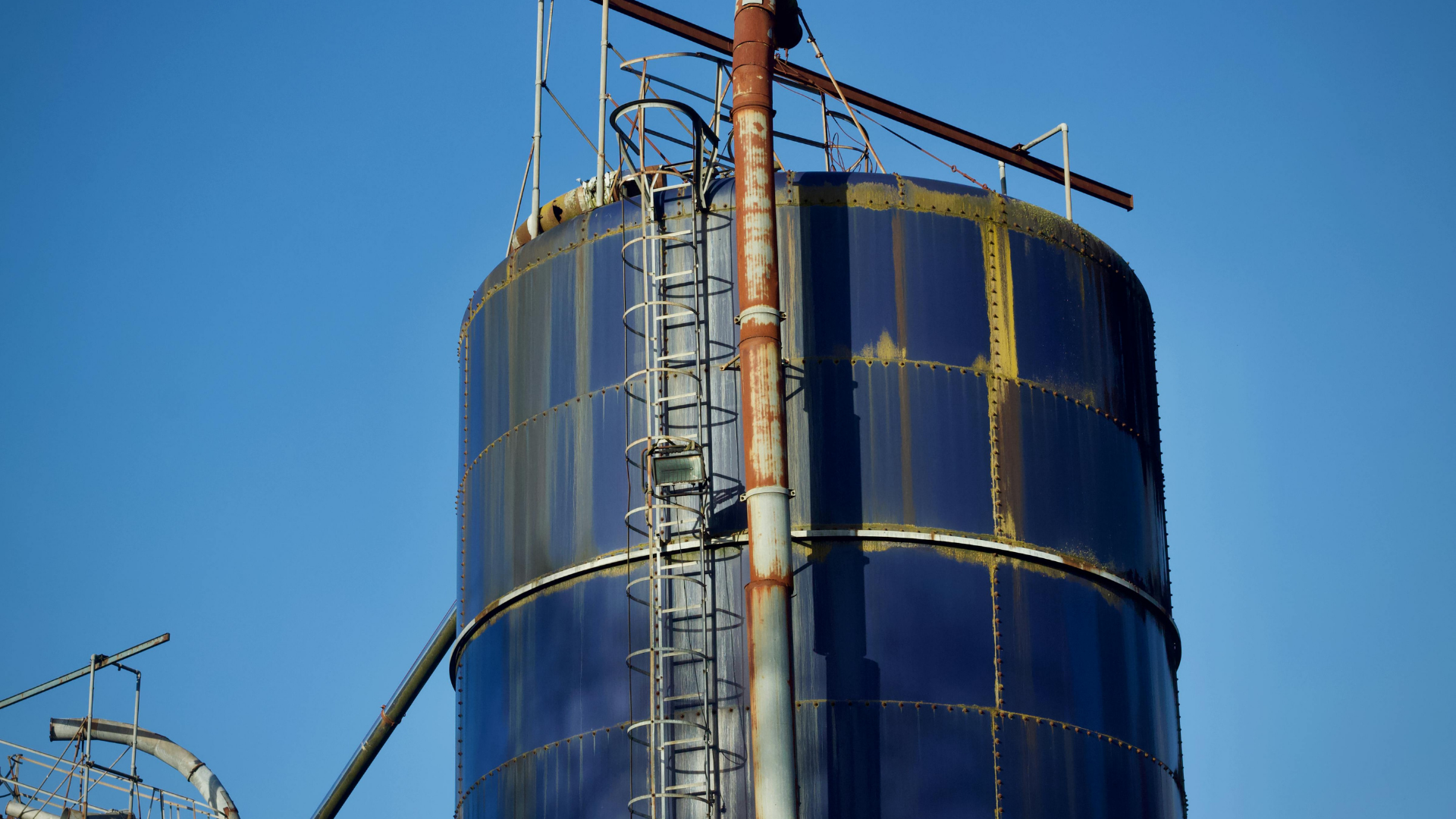
Cement silo inspection is, traditionally, a logistical nightmare. These are massive steel structures where corrosion and material abrasion can thin the walls, risking catastrophic structural failure.
Recently, the Skyline Drones team was commissioned to solve a complex challenge for a client in the construction materials industry: evaluating the structural condition of a fleet of 37 cement silos.
While carbon steel—the primary material for these silos—is extremely robust, it is subject to constant stress in a cement storage context. On one hand, there is mechanical abrasion caused by the continuous flow of abrasive material; on the other, atmospheric corrosion can thin the walls from the outside in.
The primary issue with these assets is that wear is not always visible to the naked eye. A wall may appear flawless on the surface while its nominal thickness has dropped below safety limits.
Contact-Based Integrity Analysis
The technical inspection of the 37 silos involved a direct measurement process of the carbon steel wall thickness using ultrasonic testing (UT) equipment. We performed a series of NDT (Non-Destructive Testing) measurements designed to identify structural degradation caused by cement abrasion and atmospheric corrosion.
Measurement Dynamics on Carbon Steel
To obtain valid data, the process required controlling three critical variables: perpendicularity of the transducer, contact pressure, and the coupling medium. Carbon steel has a sound velocity of approximately 5 920 m/s. Any micro-layer of air between the sensor and the wall would attenuate the signal entirely.
During the inspection, we utilized a sensor capable of transmitting ultrasonic waves through the metal structure by maintaining constant pressure on the silo wall long enough for the probe to emit the pulse and receive the back-wall echo. This method allowed us to determine the residual wall thickness with a precision of +/- 0.1 mm, even in areas with heavy cement dust accumulation. Data validation was performed in real-time via A-Scan analysis on the control terminal; a valid signal is confirmed by clear “peaks” (echoes) on the graph, indicating the distance traveled by the wave to the internal surface and back.
Data Interpretation: Where Does Wear Occur?
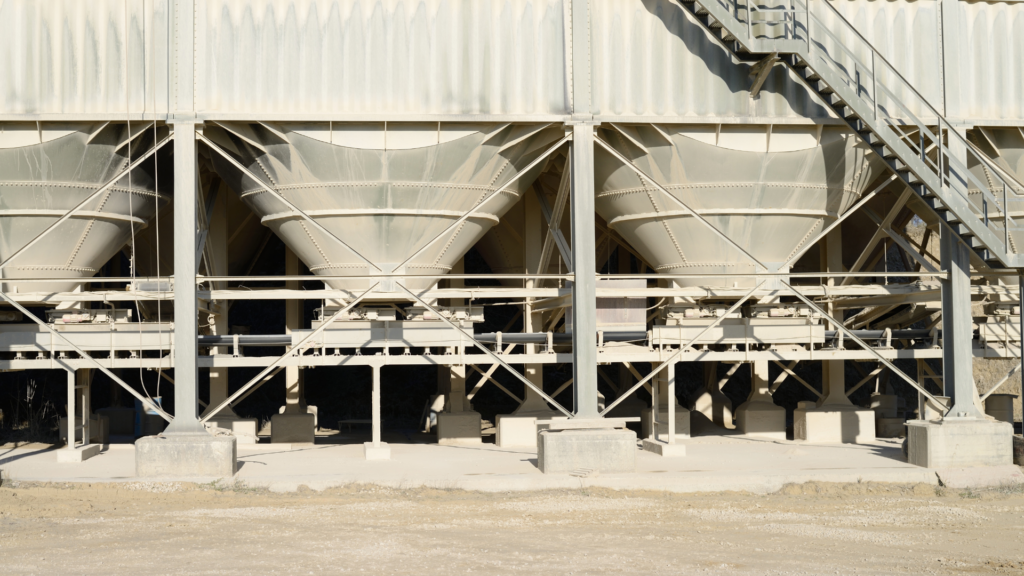
Measurements demonstrated that wall thinning is never uniform. By aggregating data from all 37 units, our team identified critical points in the transition zones leading to the discharge cones. In these areas, the constant friction of the abrasive material reduced the steel thickness by significant percentages compared to the original design specifications. This data now enables the estimation of the remaining useful life (RUL) for each silo and allows for targeted maintenance planning, significantly increasing overall site safety.
Scaling the Solution: When to Deploy UT Drones?
While the access in this specific project allowed for sensor manipulation from the ground or existing platforms, our technology offers a crucial alternative for much taller or inaccessible structures: UAS equipped with articulated UT arms.
We would opt for the UT-arm drone in scenarios where:
-
Vertical height exceeds 15–20 meters, making precise ground-based operation impossible.
-
Ground obstacles (piping, power lines, or other machinery) block access to the base of the hoppers.
-
Silo geometry requires measurements in central zones far from any railings or access platforms.
In such scenarios, the drone acts as the sensor carrier, utilizing flight algorithms to maintain constant contact pressure while the operator monitors the ultrasonic data remotely. This approach eliminates the need for scaffolding, reducing costs and lead times without compromising data accuracy.
The Final Result
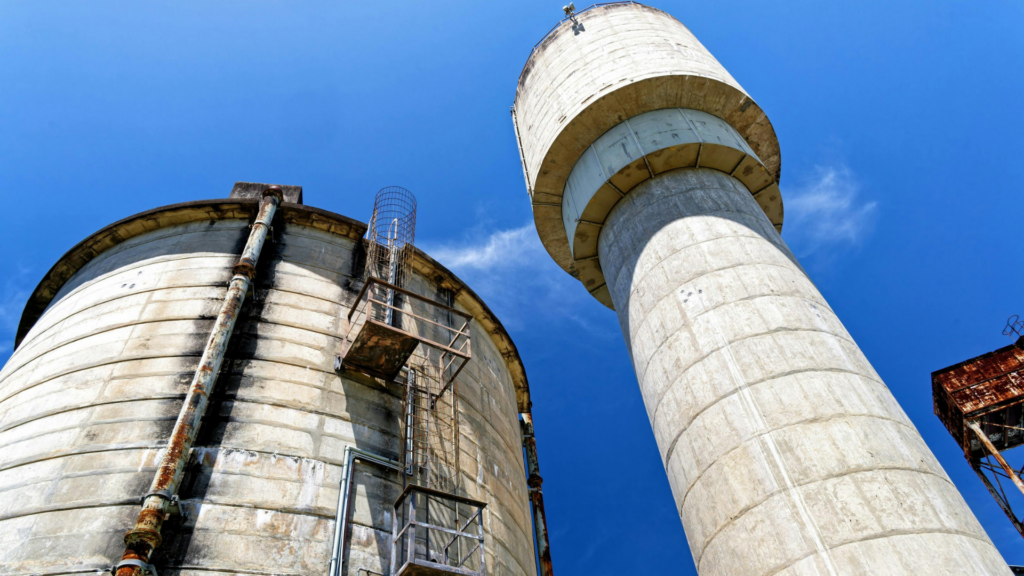
The measurements provided the client with a clear thinning map for each of the 37 silos. This database now allows for a mathematical estimation of the wear rate (mm/year) and the scheduling of localized welding repairs or carbon steel segment replacements only where necessary. The result is a heightened level of safety, eliminating the risk of sudden wall failure under the pressure of hundreds of tons of cement.