The Silent Decay of a Visual Masterpiece
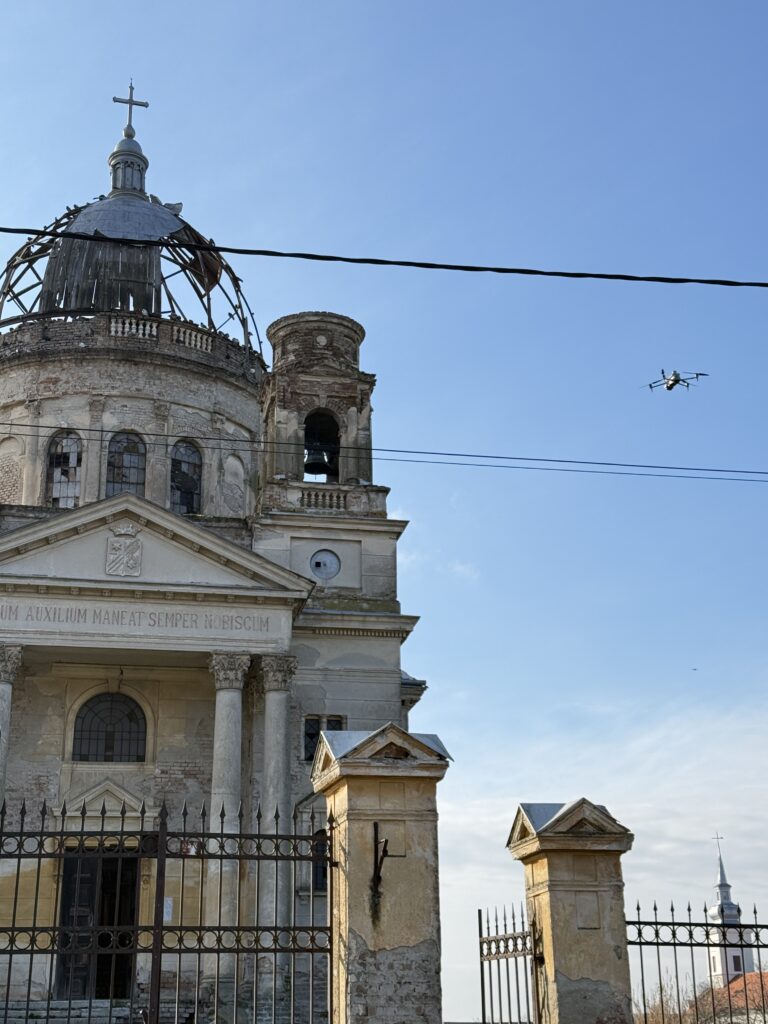
In the heart of Banat, the village of Bobda holds a structure that mirrors the grandeur of the Esztergom Basilica. Built in 1908 by Baron Gyula Csávossy, the Roman Catholic Church and family mausoleum once stood as a testament to aristocratic refinement, featuring Munich-stained glass and bells cast in Timișoara.
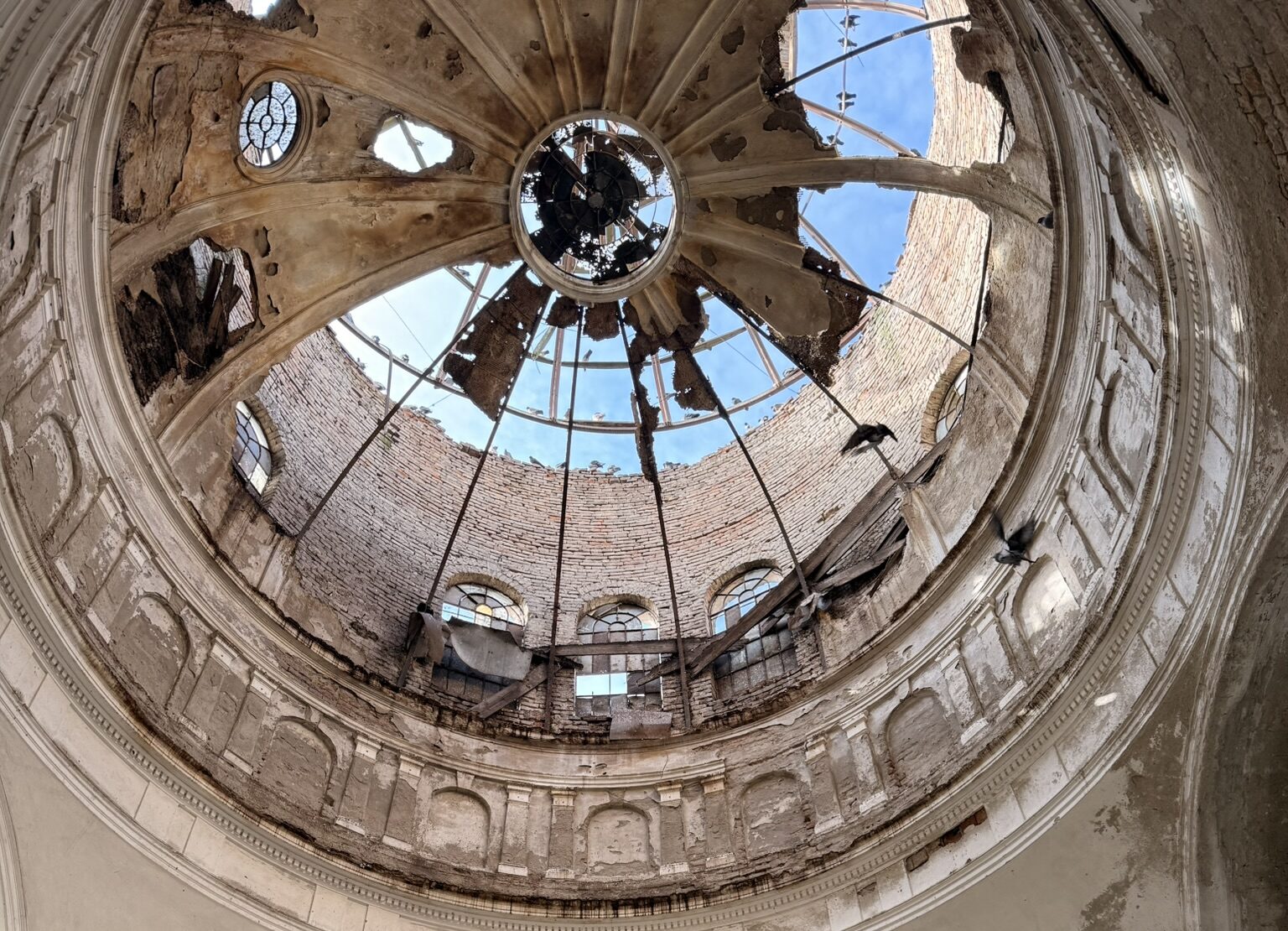
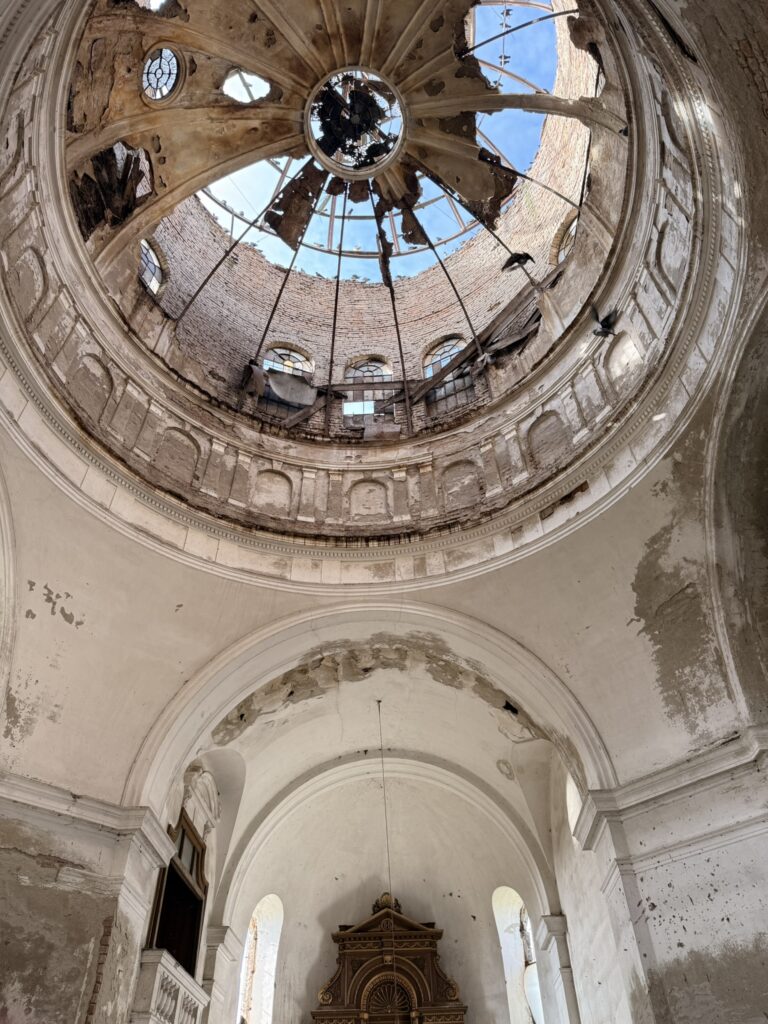
However, history was not kind to the monument. Decades of neglect following 1946 led to a critical structural decline. By 2020, the main dome partially collapsed, leaving the interior, and its remaining history, exposed to the elements. For preserving national cultural heritage with UAS, the Skyline Drones team recognized that traditional surveying methods were no longer an option due to the advanced state of degradation.
Digital Reconstruction: A Necessity for Survival
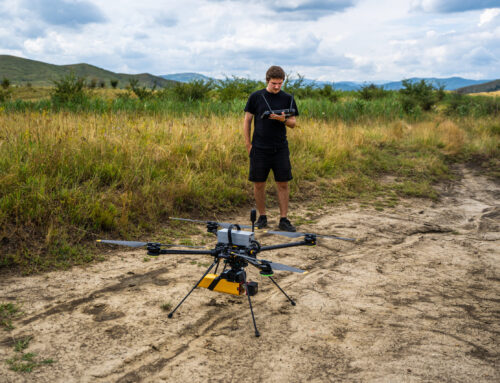
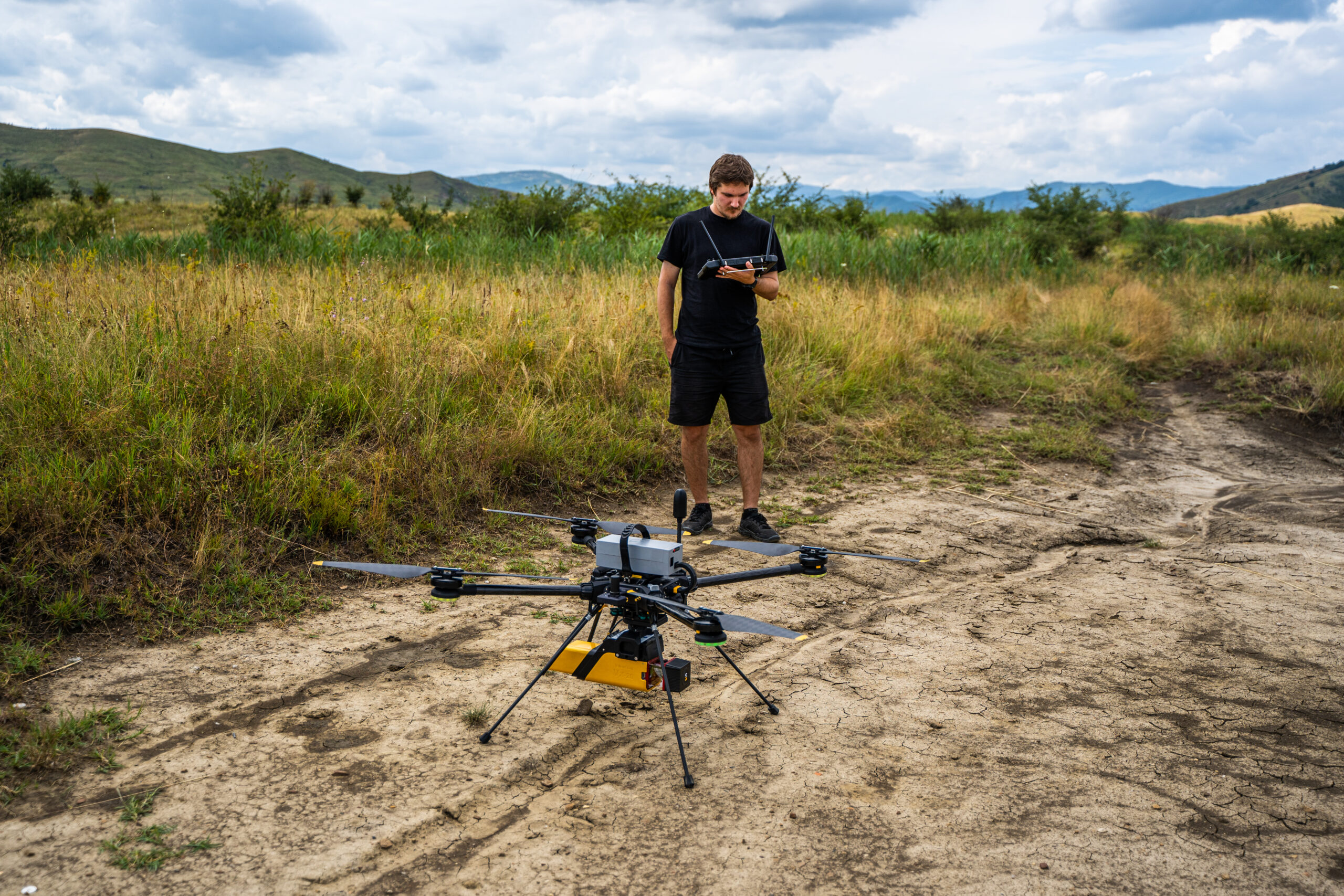
The intervention focused on creating a high-fidelity “Digital Twin” of the monument. This process started with an aerial perspective, using drones equipped with RTK (Real-Time Kinematic) technology to achieve centimeter-level positioning accuracy.
While traditional scaffolding would have taken weeks to assemble and could have further stressed the fragile masonry, the UAS inspection mapped the entire exterior in hours. The 56x hybrid zoom allowed the team to document cracks in the upper steeples and the exact perimeter of the collapsed dome without making physical contact with the brickwork.
Integrating TLS and UAV Data
Precision in preserving national cultural heritage with UAS is achieved through the fusion of data. While the drones captured the inaccessible heights and rooftops, Terrestrial Laser Scanning (TLS) was used for the interior vaults and the crypt.
The resulting 3D point cloud provided a mathematical map of the destruction. It revealed structural inclinations in the towers and identified the exact points where water infiltration was most aggressive. This data set serves as the primary blueprint for any future restoration effort, ensuring that every brick replaced aligns with the original 1908 geometry.
Quantifiable Impact on Heritage Conservation
The Bobda project highlights a shift in how we approach endangered monuments. The use of UAS technology provided:
-
A 95% reduction in inspection time compared to manual methods involving scaffolding.
-
360° coverage of the monument, capturing angles that are physically impossible to reach for a human surveyor.
-
Non-invasive documentation, ensuring that the survey process itself did not contribute to the site’s decay.
Future-Proofing History
The digital Twin of the Bobda Church is now a permanent record. Even if the physical structure continues to face the challenges of time and weather, its architectural essence is preserved in a cloud of billions of precise data points.
For the local community and heritage experts, these findings represent the first concrete step toward an organized intervention. The data facilitates emergency structural stabilization and provides the technical foundation required for securing European restoration grants. By preserving national cultural heritage with UAS, we are not just documenting ruins; we are building the only viable bridge between a crumbling past and a restored future.